
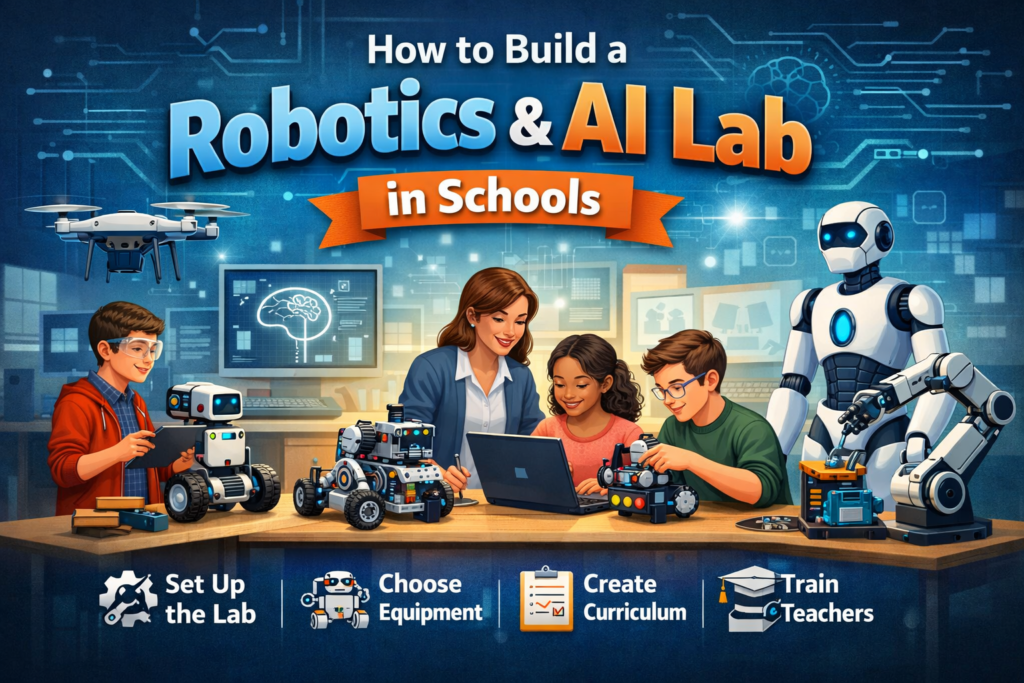
Technology is no longer an optional subject in education—it is a core life skill. Robotics and Artificial Intelligence (AI) are shaping industries, careers, and the way students think and solve problems. That’s why schools across the world are now investing in Robotics and AI Labs to prepare students for the future.
Setting up a Robotics & AI Lab may sound complex, but with the right planning and step-by-step approach, any school can successfully build one. This guide explains how to build a Robotics and AI Lab in schools, from vision to execution.
Why Schools Need a Robotics & AI Lab
Before jumping into the setup process, it’s important to understand why Robotics and AI labs are essential in modern education.
A Robotics & AI Lab helps students:
- Develop logical thinking and problem-solving skills
- Learn coding, automation, and data-driven thinking
- Improve creativity, innovation, and teamwork
- Gain early exposure to future career skills
- Apply theoretical concepts through hands-on learning
Robotics and AI labs transform classrooms from passive learning spaces into interactive innovation hubs.
Step 1: Define the Purpose and Learning Objectives
The first step in setting up a Robotics and AI Lab is clarity.
Ask these questions:
- Which grades will use the lab (primary, middle, high school)?
- Is the focus on robotics, AI, coding, or all three?
- Will the lab support curriculum learning or extracurricular activities?
- Are you preparing students for competitions, projects, or career pathways?
Clear goals help in selecting the right equipment, curriculum, and teaching approach.
Step 2: Allocate Space for the Robotics & AI Lab
You don’t need a massive area, but the lab should be safe, flexible, and well-organized.
Ideal lab requirements:
- A dedicated room or innovation space
- Good ventilation and lighting
- Tables for group work
- Storage cabinets for kits and components
- Power sockets and internet connectivity
The space should encourage collaboration, experimentation, and creativity.
Step 3: Choose the Right Robotics and AI Equipment
Selecting age-appropriate and scalable tools is crucial for long-term success.
For Primary Students:
- Block-based coding kits
- Beginner robotics kits
- Sensors and simple motors
For Middle School Students:
- Programmable robotics kits
- Microcontrollers (basic level)
- Visual and text-based coding platforms
For High School Students:
- Advanced robotics kits
- AI tools and datasets
- Python-based programming platforms
- IoT and automation components
Always choose modular tools that can grow with students’ skills.
Step 4: Select a Structured Robotics & AI Curriculum
A lab without a curriculum becomes a storage room. A strong curriculum ensures meaningful learning outcomes.
An effective Robotics & AI curriculum should:
- Be age-appropriate and progressive
- Include hands-on projects and challenges
- Cover robotics, coding, and AI fundamentals
- Align with STEM and NEP/CBSE/ICSE frameworks (if applicable)
- Encourage real-world problem solving
Schools should avoid random kits and instead adopt a structured learning pathway.
Step 5: Train Teachers and Lab Instructors
Teacher readiness is one of the most critical success factors.
Teachers should be trained to:
- Operate robotics and AI tools confidently
- Guide students through projects, not just theory
- Encourage inquiry-based learning
- Troubleshoot basic hardware and software issues
Regular training workshops and refresher sessions help teachers stay updated with evolving technology.
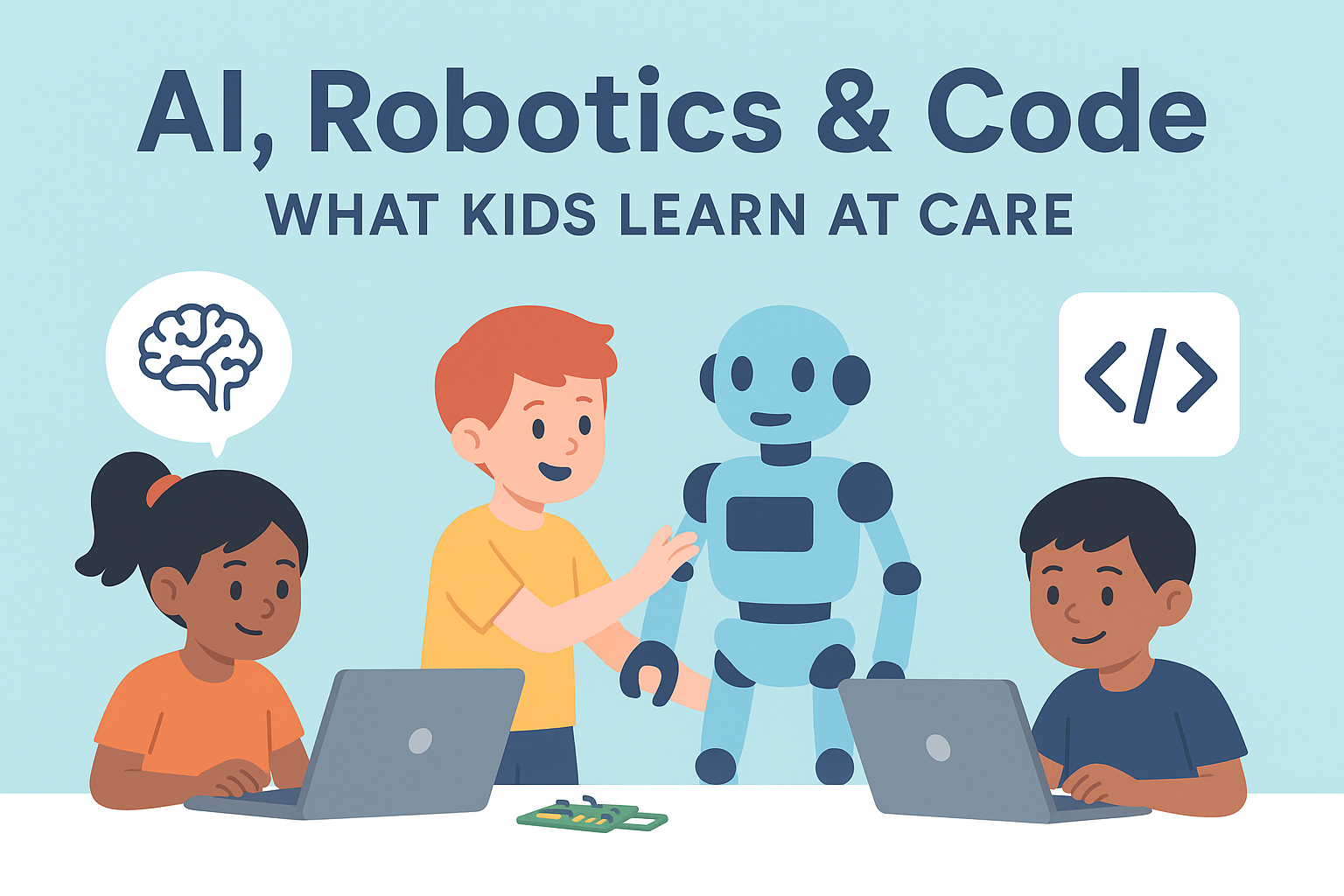
Step 6: Ensure Safety and Lab Management
Safety is essential in a Robotics & AI Lab.
Important safety measures include:
- Proper handling guidelines for tools and electronics
- Organized storage of components
- Supervision during lab sessions
- Clear lab rules for students
Assign a lab coordinator or trained instructor to manage equipment and schedules efficiently.
Step 7: Integrate Robotics & AI into the School Curriculum
To maximize impact, the lab should not function in isolation.
Ways to integrate the lab:
- Link robotics projects with math and science concepts
- Use AI projects to explain real-life applications
- Include robotics activities in assessments and presentations
- Encourage interdisciplinary projects
This integration ensures students see technology as a problem-solving tool, not just a subject.
Step 8: Encourage Projects, Competitions, and Innovation
A Robotics & AI Lab thrives when students are motivated.
Schools can:
- Organize internal robotics challenges
- Participate in inter-school competitions
- Host innovation days or exhibitions
- Encourage student-led projects
These activities build confidence, teamwork, and practical exposure.
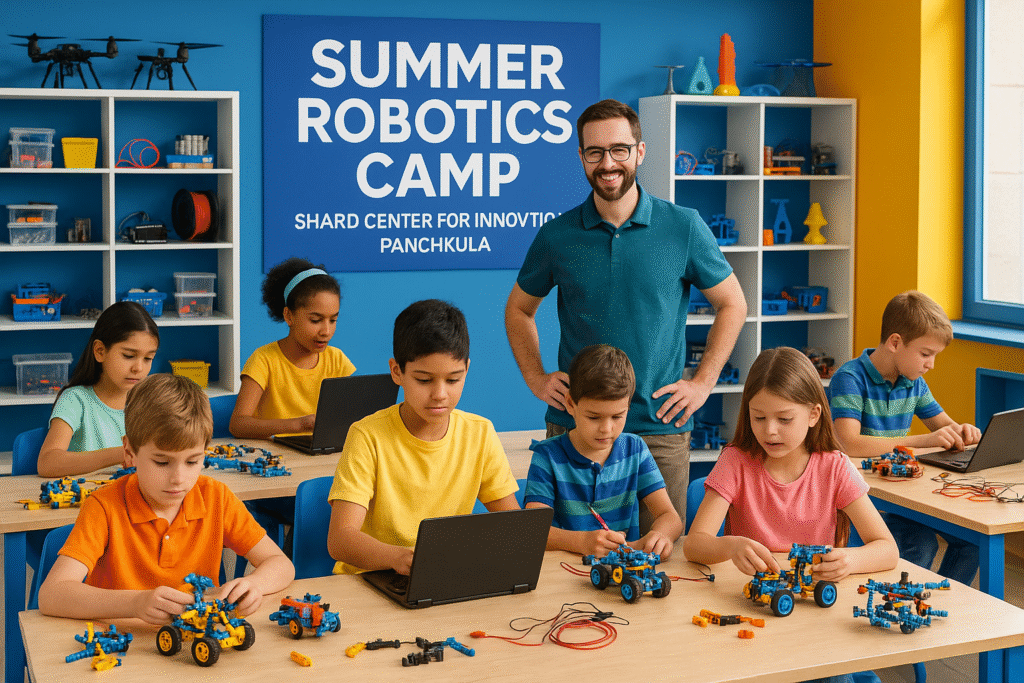
Step 9: Budget Planning and Cost Optimization
Setting up a Robotics & AI Lab is an investment, not an expense.
Cost considerations include:
- Robotics and AI kits
- Computers or tablets
- Teacher training programs
- Lab furniture and infrastructure
- Maintenance and upgrades
Schools can start small and scale gradually as student interest grows.
Step 10: Evaluate, Upgrade, and Scale
Technology evolves rapidly. Regular evaluation ensures the lab stays relevant.
Review periodically:
- Student engagement and learning outcomes
- Equipment usage and wear
- Curriculum effectiveness
- Teacher feedback
Based on insights, schools can upgrade tools, add advanced modules, or expand lab capacity.
Benefits of a Well-Designed Robotics & AI Lab
When implemented correctly, a Robotics & AI Lab:
- Improves student engagement and curiosity
- Builds future-ready skills
- Enhances the school’s academic reputation
- Encourages innovation and critical thinking
- Prepares students for STEM careers
Final Thoughts
Building a Robotics and AI Lab in schools is not just about technology—it’s about shaping how students think, learn, and innovate. With a clear vision, structured curriculum, trained teachers, and the right tools, any school can successfully set up a Robotics & AI Lab.
By investing in robotics and AI education today, schools empower students to become tomorrow’s creators, engineers, and problem-solvers.