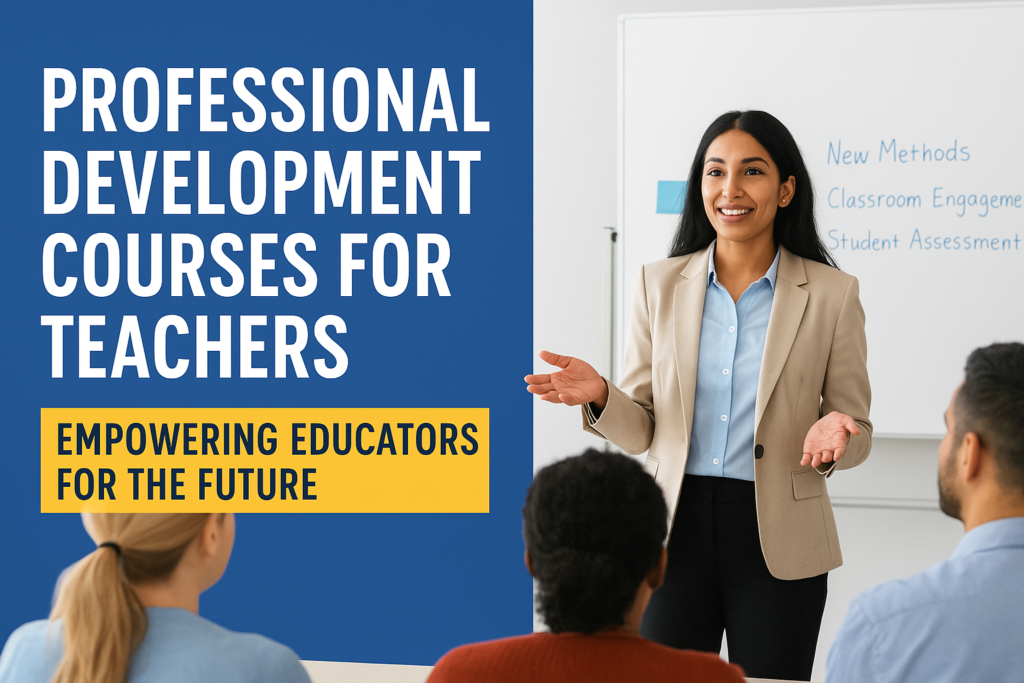
Teachers are the backbone of the education system. They shape young minds, build strong foundations, and influence the next generation’s success. But in a fast-changing world driven by technology, digital learning, and new teaching methodologies, it’s essential for teachers to keep growing too. This is where Professional Development Courses for Teachers play a vital role.
Professional development is more than just training—it is continuous learning that helps teachers upgrade knowledge, adopt new teaching strategies, and stay confident in the classroom. Whether it’s mastering digital tools, understanding child psychology, improving communication skills, or learning the latest pedagogical methods, upskilling helps teachers become more effective educators.
Why Professional Development is Essential for Teachers
1. Enhances Teaching Skills
Professional development courses introduce modern teaching techniques such as blended learning, differentiated instruction, active learning strategies, and project-based learning. These methods help teachers make classroom learning more interactive and student-focused.
2. Helps Teachers Stay Updated
Education systems and curriculum standards change regularly. Training ensures teachers stay updated with the latest concepts, teaching trends, and national education policies like NEP 2020.
3. Boosts Confidence & Classroom Management
Courses like classroom management, leadership training, and communication skill development help teachers create a positive environment and handle students more effectively.
4. Promotes Personal Growth
Professional development improves analytical thinking, problem-solving, decision-making, and leadership qualities. It also motivates teachers to continuously improve.
5. Enhances Career Opportunities
Upskilled teachers are often promoted faster, given leadership roles, or become curriculum designers, coordinators, and academic trainers.
Types of Professional Development Courses for Teachers
1. Digital Teaching & EdTech Training
With the rise of digital classrooms, teachers must understand:
- Smart class tools
- Learning management systems (LMS)
- Google Classroom, MS Teams
- AI-powered teaching tools
- Digital assessments
These courses help teachers manage hybrid and online teaching effectively.
2. Classroom Management Courses
These sessions focus on:
- Handling disruptive behaviour
- Creating engaging lesson plans
- Managing time and communication
- Building student discipline
- Encouraging collaboration
Good classroom management ensures a balanced and productive learning experience.

3. NEP 2020 & Curriculum Training
Teachers need to understand:
- The new education structure
- Experiential learning
- Competency-based education
- Activity-based learning
- Skill-based assessments
These courses help teachers align their teaching with the latest policy guidelines.
4. Inclusive Education & Special Needs Training
With growing emphasis on inclusive learning, teachers can learn:
- Basics of learning disabilities
- Inclusive classroom strategies
- Working with children having autism, ADHD, dyslexia
- Behavioural management
- Individual education plans (IEPs)
This training ensures every child receives equal learning opportunities.
5. Communication & Soft Skills Courses
Teachers improve essential skills such as:
- Public speaking
- Interpersonal communication
- Conflict resolution
- Student counselling
- Leadership & teamwork
Soft skills help teachers build stronger relationships and a supportive learning environment.
6. Subject-Specific Training
Teachers can enhance mastery in subjects like:
- Science
- Mathematics
- English & communication
- Social sciences
- Computer science & coding
These courses ensure teachers are confident in both subject knowledge and teaching methods.
7. Technology & Coding for Teachers
As coding and AI enter school curriculum, teachers can learn:
- Basics of programming
- Scratch coding
- Python
- Robotics & AI
- Data literacy
- STEM activity planning
This is especially beneficial for schools introducing future-ready subjects.
8. Mental Health & Emotional Well-being Workshops
These workshops teach educators how to:
- Understand student emotions
- Handle stress and anxiety
- Support students during challenges
- Maintain their own mental wellness
A emotionally balanced teacher creates a positive classroom atmosphere.
Benefits of Professional Development Courses for Schools
✔ Improved Student Performance
Trained teachers deliver better lessons, leading to improved student engagement and academic results.
✔ Increased School Reputation
Schools with certified, trained teachers gain parents’ trust and stand out in admissions.
✔ Strong Academic Planning
Teachers are better equipped to design lesson plans, assessments, and teaching calendars.
✔ Better Use of Technology
Professional training helps schools implement smart classrooms and digital learning tools more effectively.
✔ Motivated & Confident Teachers
Continuous learning boosts teacher morale and builds a culture of growth.
How Schools Can Implement Professional Development Programs

1. Regular Teacher Training Workshops
Schools can schedule monthly or quarterly workshops covering different skills and subjects.
2. Partnering With Professional Training Companies
Many organizations specialize in teacher skill development, curriculum design, and EdTech training. They provide structured courses and certification programs.
3. Creating Peer-Learning Groups
Teachers can collaborate, share teaching ideas, and observe each other’s classes.
4. Encouraging Online Certifications
Platforms like Coursera, Google for Education, Microsoft Education, and academic institutes offer certified teacher training programs.
5. Continuous Feedback Systems
Schools should collect feedback, observe classrooms, and guide teachers to apply their learning practically.
Choosing the Right Professional Development Course
When selecting a training program, teachers should consider:
- What skills they want to improve
- Course duration and flexibility
- Certification value
- Practical implementation
- Alignment with school curriculum
- Trainer qualifications
A good training program should be hands-on, interactive, and easy to apply in daily teaching.
Conclusion
Professional Development Courses for Teachers are essential for creating modern, future-ready educational environments. As technology advances and teaching methodologies evolve, continuous learning becomes crucial for every educator. Upskilling helps teachers improve their classroom performance, boost student outcomes, and grow in their careers.